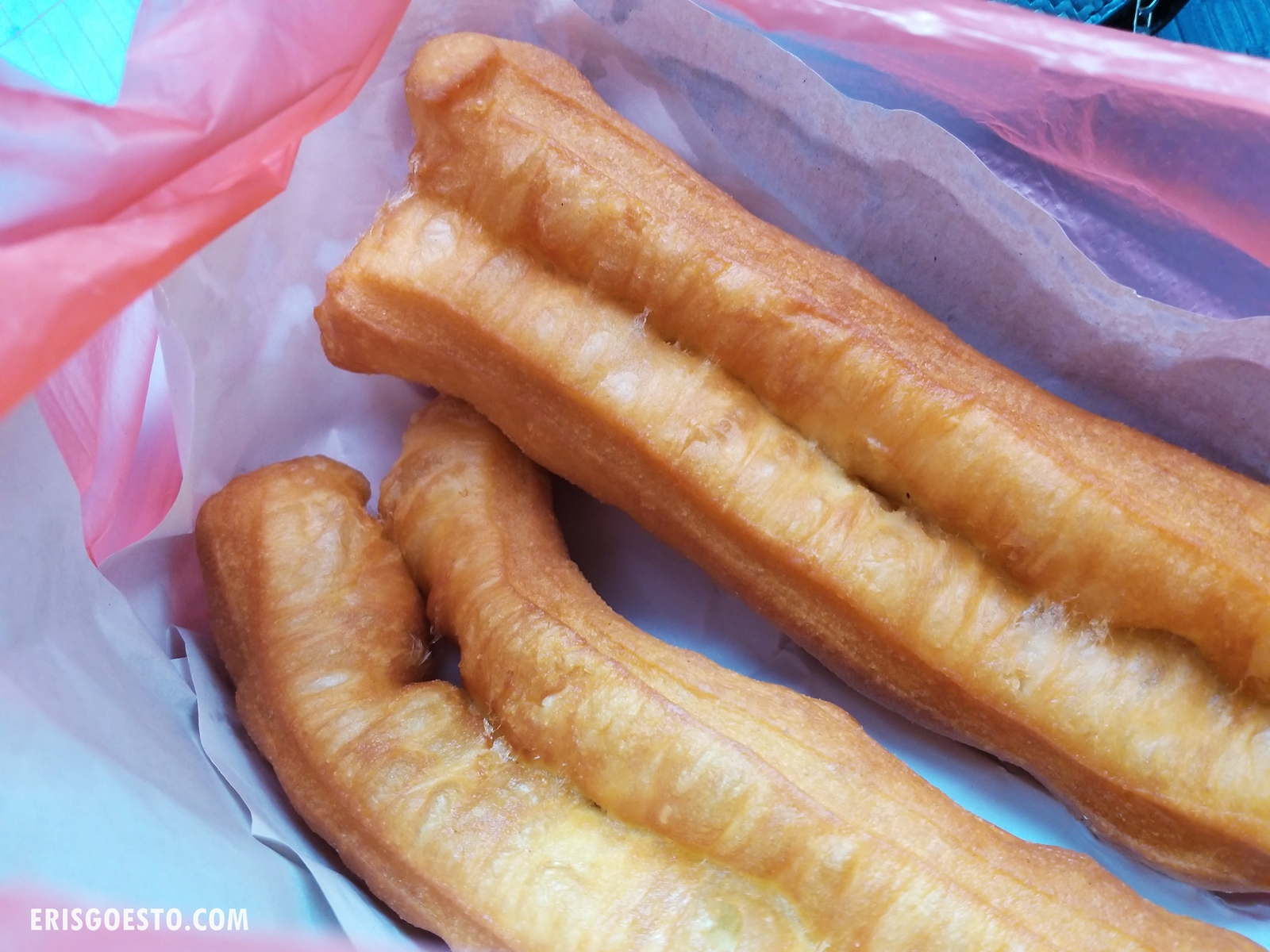
Last week for unknown reasons, I had an intense craving for Chinese breadsticks, known locally among the Cantonese-speaking population in Malaysia as yau char gwai. Literally translated, the name means ‘ oil fried ghost’, or ‘a ghost/devil fried in oil’.
Legend has it that in the Song dynasty, an evil couple, jealous of a well-loved general, colluded with the enemy to frame him. The general was executed, much to the anger of the citizens. They protested by creating two human-shaped pieces of dough joined in the middle to represent the couple, frying the pastry in hot oil as if done to the traitorous couple.

What I like about yau char gwai is its simplicity – the sticks are made from dough and a bit of salt and sugar for seasoning, but typically do not have a lot of flavour. They are crispy on the outside and airy and porous on the inside, making them great for dipping and as an accompaniment to drinks and soups, such as bak kut teh (meat in a herbal soup), soya bean, porridge, coffee and even Milo. They are also cheap and filling; the above two pieces cost only RM3 (0.73 USD).
Yau Char Kwai can be found in many regions, in particular China and Southeast Asia. i goes by other names, such as youtiao (Mandarin Chinese), Cha Kway (Cambodia), Bicho (Philippines), Cakwe (Indonesia), E Kwa Kway (Myanmar), Pathongko (Thailand) and dầu cháo quẩy (Vietnam).


Leave a Reply