Since 2016, I’ve been to Manila five times. On all of the trips, I always played tourist: visiting attractions, staying in hotels, letting someone bring me around to the ‘best’ spots.
This time around though, my chief purpose was to accompany N to visit our family over Christmas, as well as stop by places that are near and dear to his heart – which allowed me the opportunity to see how daily life really is like in parts of Manila, beyond the cushy confines of tourist spots.

One of the neighbourhoods that we visited was Punta, Santa Ana. The district, which is ringed by the Pasig River, is named after Saint Anne by Spanish conquistadors and is one of the older ones in Manila. It houses a church dating back to the 1700s that was established by Franciscan monks, which still stands to this day. The area is also known as the birthplace of the Iglesia ni Cristo, a prominent Filipino church.
We were in the neighbourhood to say hi to some of N’s relatives, who still live in the area, as well as visit his ancestral home (where his lolo, ie grandpa, used to live), as the building will be sold.

With many churches and religious institutions around, it’s clear that the community at Punta is deeply religious. Some interesting sights that we passed include an INC church and the Ina ng Laging Saklolo (Our Lady of Perpetual Help Parish) The latter is an interesting structure, with an angular, almost trapezoidal-shaped roof topped by a large cross ringed by an elaborate crown. A statue of Cardinal Jaime Sin, Manila’s former archbishop, welcomes visitors at the entrance.

Like many housing areas in Manila, the streets around Punta can be narrow, sometimes barely enough for one car to squeeze through at a time. SIL managed to find parking and then we made a few house visits on foot.

The neighbourhood looks well kept, with clean streets and plants/shrubs adding greenery. Unlike housing estates in Malaysia, which comprise of uniform terraced houses, no two houses here look the same, since they’re basically built from scratch by the owners.
Like in Thailand, the electric poles support a dozens, if not hundreds of wires that look impossible to untangle. This haphazardness, coupled with the unique appearance of each home, adds charm and character to the place.

Roosters are everywhere in Metro Manila, usually kept for cock fighting (sabong). After basketball, sabong is probably the next most popular sport in the Philippines. Legal ones are held in official cockpits/arenas or given special clearance for fiestas, but there are lots of illegal matches too which involve gambling.

Sari-sari stores are small, home-based sundry shops that play an important role in the Philippine micro-economy and are ubiquitous in every neighbourhood. They also provide a convenient way for locals to buy necessities without having to travel to the supermarket, especially in rural areas.
Here, you can find non-perishable essentials such as oil, sugar, and salt, as well as toiletries, snacks, and soft drinks. Items are usually sold per unit: for example, shampoos are sold in sachets instead of in larger bottles.

A list of barangay and town level officials.

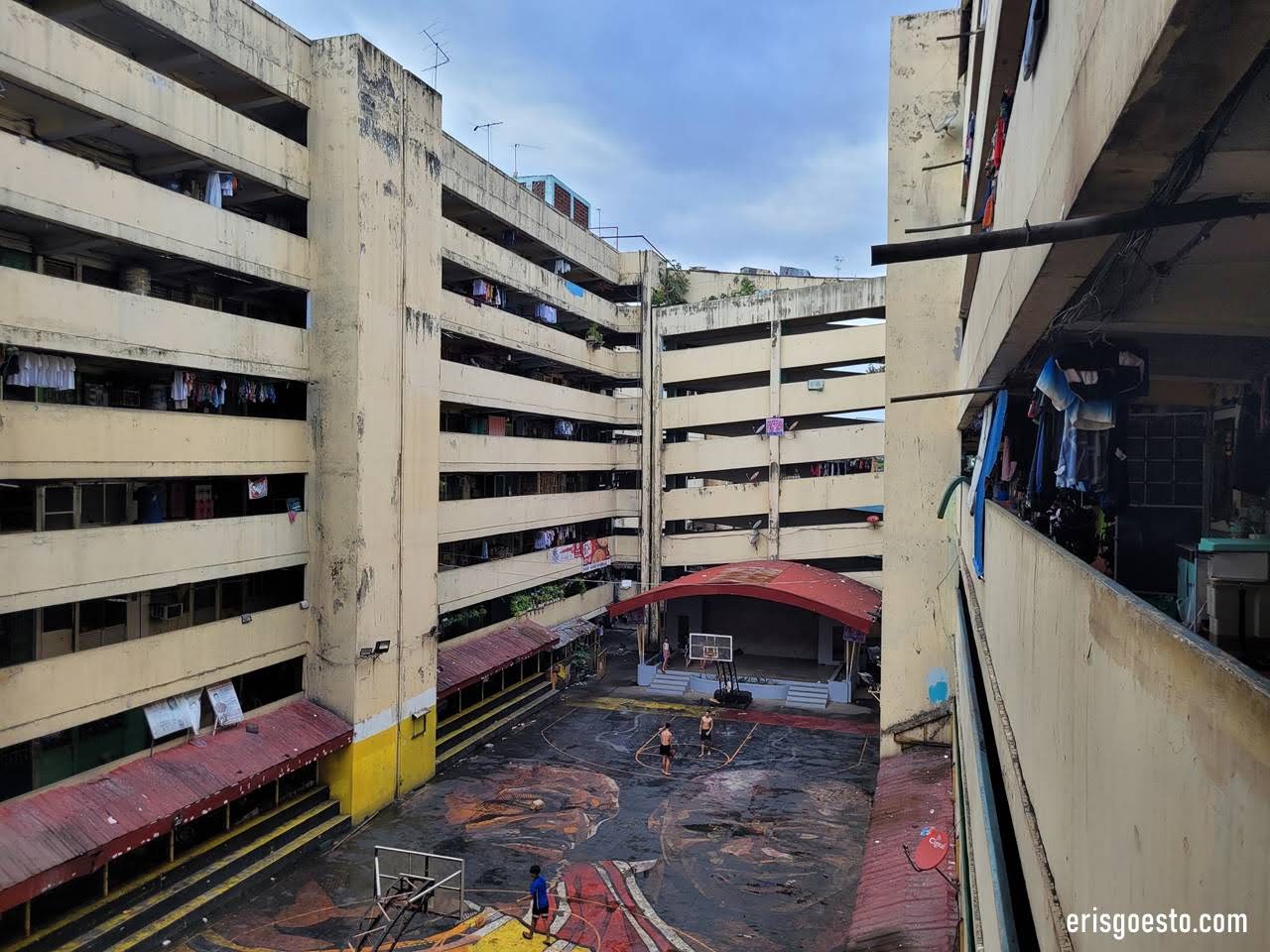
One of the most recognisable landmarks here is the Punta Santa Ana Tenements. Built in the 1960s, it is one of the first housing projects in Manila, and was initially constructed for low-income earners and informal settlers in the area. Today, it houses about 1,000 people in tiny studio units across multiple blocks.

The structure looks fairly okay on the outside, but the building has actually been deemed structurally unsound by the Department of Public Works and Highways in 2010.
Despite the risks and calls from the government to relocate, families have stayed put as both parties are unable to reach a consensus on an alternative housing site, since those offered by the government are usually far away from the city, and therefore the residents’ source of livelihoods.

Arts and basketball culture are strong within the tenements.
The Fort Bonifacio Tenements, another old housing project in Manila, gained international fame when photographs of its gigantic murals on its main courtyard went viral, attracting basketball stars like Paul George and LeBron James to visit. The iconic murals are now part and parcel of popular culture – even being featured in the NBA Live 19 video game.
Similarly at Punta Santa Ana, the central basketball court is dominated by a huge mural, featuring LeBron James and Michael Jordan. Its beautifully done, and especially striking when viewed from the upper floors.


There are no lifts, but there are ramps which residents sometimes use to drive their scooters / trikes up to their unit.
There are clear signs of decay here, especially the parts linking the ramp to the corridors, which have giant gaps between them so you can see all the way to the bottom floors. There are also cracks on the ceilings, with paint peeling everywhere.

The community, however, is a stark contrast to the physical decay of the building. It bustles with life and activity – from the children and teens playing basketball on the court, to the titas clustered around someone’s front door catching up on the latest chismis, and the titos lounging on chairs along the corridor reading papers and enjoying a smoke.
Many of the units also double as micro businesses, selling groceries or snacks, and there was even one with a makeshift stove on the corridor peddling isaw (grilled intestines).

Reflecting the community’s deep religious roots, the small Catholic shrine here is kept in pristine condition, offering residents a spot for respite.

With their building condemned and no concrete solution in sight, the future of the tenement remains uncertain.
But even so, life goes on for its residents, one day at a time.


Leave a Reply to LookoomCancel reply