Whether you’re a Sabahan or Sarawakian craving a taste of home or just a curious KL-ite (like yours truly) looking for a unique experience, Pasar Borneo in Seri Kembangan is a must visit. Held every Saturday from 7am to 11am along Jalan Jinma 7, the market offers all sorts of delicacies, snacks, and produce from East Malaysia, which are a rarity to see this side of the country.

Pasar Borneo has actually been around for close to a decade, but I only found out about it recently after seeing a social media post. Since it’s not far from my place, the Hubs and I came here over the weekend to see if we could get breakfast. The market isn’t very big, comprising about 20 stalls that mostly sell food / produce. There are a few selling handicrafts as well, such as woven rattan baskets and bags.


For East Malaysians living in KL who have a difficult time getting the right items for cooking, the market carries many ingredients indigenous to Borneo, such as breadnut (buah kulur – top left), langgangon (white bird’s eye chili), midin (jungle fern), tuhau (wild ginger), dabai (Sarawak olive), and more. Many of these ingredients are sourced from the jungle and are prized for their medicinal properties. For example, tuhau is high in fiber and antioxidants, is antibacterial, and is believed to help with lowering blood pressure.

Torch ginger flowers boast a beautiful pink hue. They are used in salads and added to soups and curries to give them a sweet/sour/tangy boost.

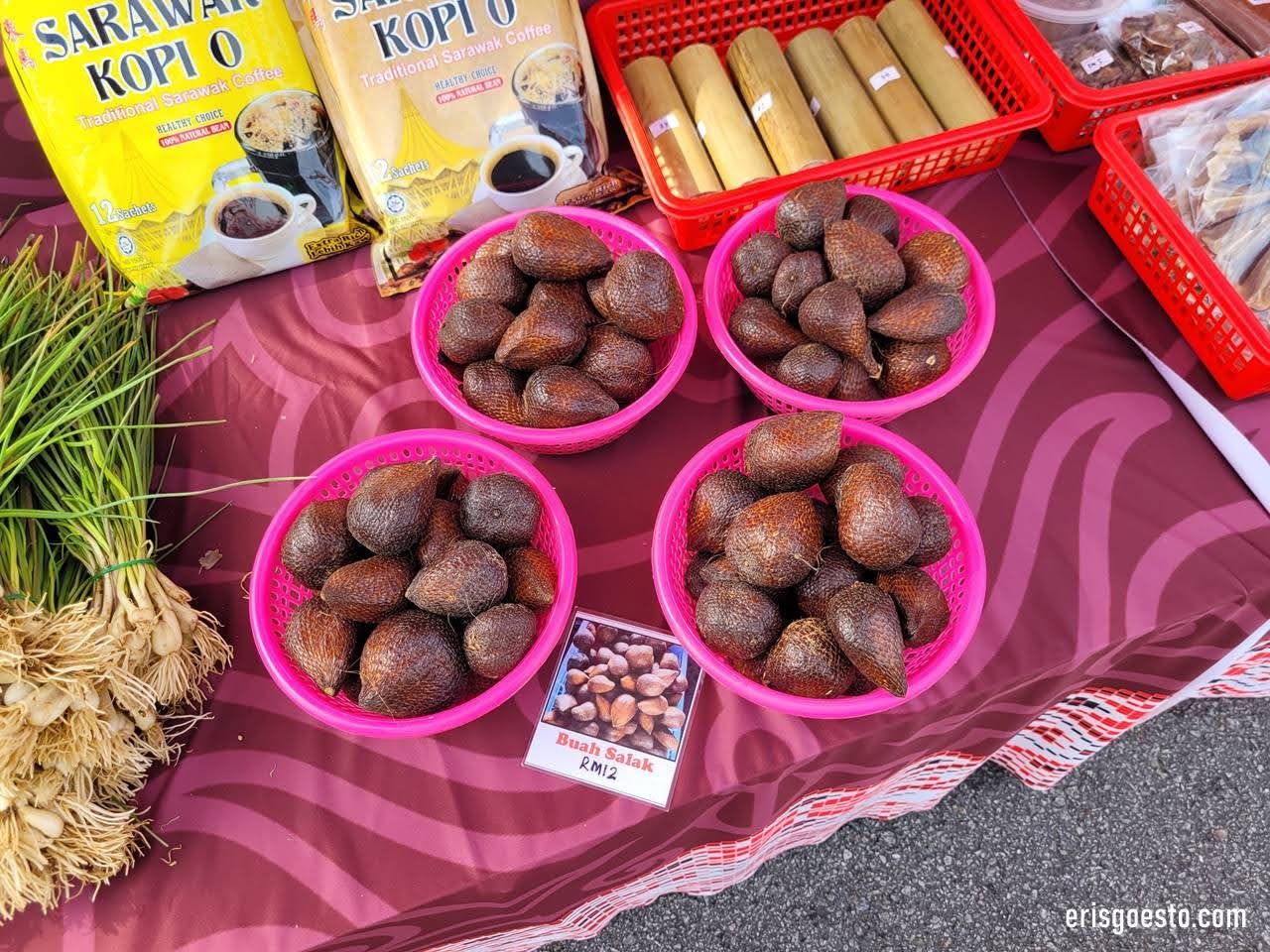
(Left) Losun, a type of wild spring onion native to Borneo, and buah salak, also called snakeskin fruit due to its scaly-looking exterior.

East Malaysians love their condiments, so you’ll find lots of fermented/pickled items, from chilli sauces and various kinds of sambal, to bosou ikan, a pickled fish paste popular among the Kadazan-Dusun and Murut ethnic tribes of Sabah. We got some pickled jellyfish; unfortunately the plastic wasn’t secured well and it spilled while we were walking to the car, so we weren’t able to try it. 🙁

Tuak (Rice wine) is a beloved traditional beverage in Sarawak among the Iban and Dayak tribes, with the Bidayuhs and Ulu people having their own distillation/production process. It is often served during major festivals like Hari Gawai (Harvest Festival). Some tuaks are made from coconut rather than rice. I rarely consume alcohol so I can’t extol the finer points of tuak, but the ones that I have tried on other occassions, I enjoyed as they were quite sweet.

If you want a meal proper, the market has a few stalls selling beef noodles, Sarawak mee kolok, Sarawak Laksa, and other carb-heavy dishes. We were feeling peckish at this point, but didn’t want to get a heavy meal so we made a beeline for the snack stalls. Got some lepat jagung and lepat pisang: the former is steamed corn and similar to tamales, the latter comprises banana that is pound to a paste, wrapped in banana leaf, then steamed.

My favourite snack from the market was the kuih pinjaram (also called penyaram), a traditional Sabahan kuih made from rice flour and corn flour. The kuih is shaped like a disc, and the edges turn crispy after deep frying, while leaving the center soft and bouncy. Love the combination of textures. It is rather sweet, so not something to have on the daily, but definitely an excellent snack.
Despite the market’s small size, there were so many unique snacks/food items on sale that we weren’t able to try everything in one go. Definitely warrants a return visit!
PASAR BORNEO SERI KEMBANGAN
Jalan Jinma 7, Pusat Perdagangan Seri Kembangan, 43300 Seri Kembangan, Selangor
Opens every Saturday, 7am – 11am
PS: If you enjoyed reading this, please consider supporting my website via Patreon. This will go towards hosting fees and ensuring that I can continue to deliver authentic content for your reading pleasure. Or buy me a cup of coffee at paypal.com @erisgoesto. Thanks for stopping by!


Leave a Reply