If I were to sum up my visit to the Philippine National Art Gallery in Rizal Park, it would be impressive. Spanning two floors, it was used as the Old Legislative Building from the 1920s – 1970s, before it was converted into a museum. It currently houses hundreds of works by Filipino artists through the ages.

The Philippines, having been colonised by the Spanish for hundreds of years, draws inspiration from Europe in their art pieces. In fact, stepping into the spacious main lobby, I was immediately reminded of European art galleries. Just behind a detailed statue of a winged angel is one of the most famous paintings in Filipino art: Spoliarium by Juan Luna Y Novicio.

The huge oil on canvas painting, which was submitted for a contest in Madrid where it garnered first place, towers over visitors from floor to ceiling. The subject of the painting focused on the bloody corpses of slave gladiators being dragged away from the arena. In a speech, Filipino freedom fighter Jose Rizal said that the painting embodied the Filipino experience with their Spanish masters, and “the essense of our social, moral and political life: humanity in severe ordeal, humanity unredeemed, reason and idealism in open struggle with prejudice, fanaticism..”
Luna’s win proved to the world that even the ‘oppressed’ could outshine their colonists, who regarded them as inferior and barbaric. Second place was also won by a Filipino painter: El Asesinato del Gobernador Bustamante (The Assassination of Governor Bustamante) by Félix Resurrección Hidalgo (which is also displayed here, just across the Spoliarium)

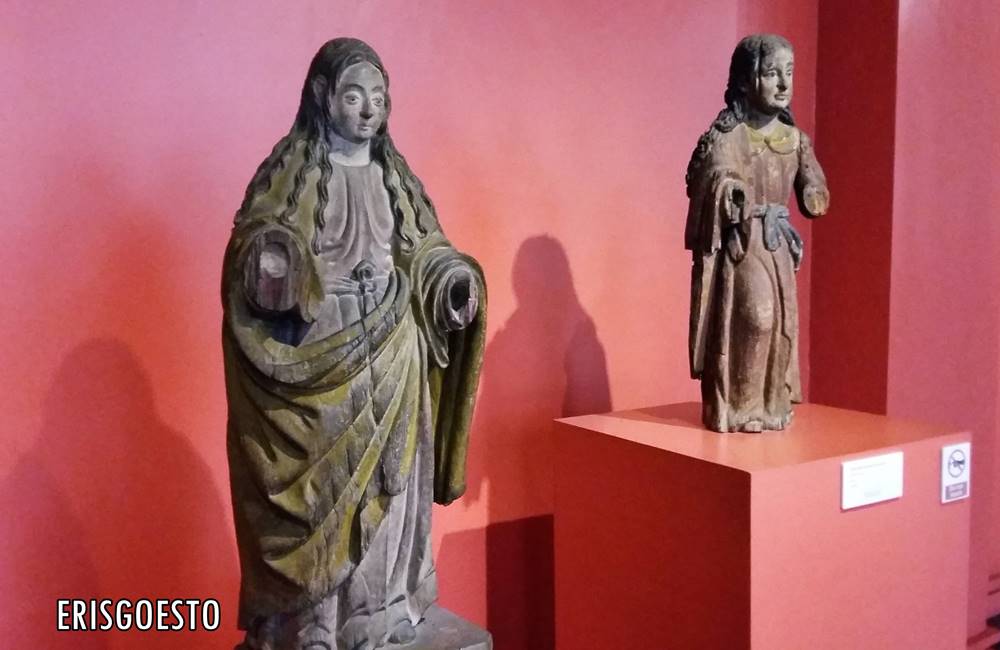
Most of the first floor gallery was dedicated to older pieces. Other than paintings, there were wooden statues and stone carvings. Many pieces were religious works, featuring figures in Catholicism such as Jesus, Mother Mary, and the saints (many of which were missing hands).

The hall holds a National Cultural Treasure: a retablo (altar piece) from the Church of San Nicolas de Tolentino in Dimiao, Bohol.

There was a series of paintings which detailed Jesus’ crucifixion and his eventual ascension to heaven. Framed in dark wood, the colours were muted and sombre, giving the subjects in them a sad, suffering quality.

Detailed stained glass, featuring Jesus and angels.


There was a whole hall dedicated to Jose P.Rizal. He’s so famous that we even read about him in Malaysian history books. His is a true example of the pen being mightier than the sword. Although he never organised a direct rebellion, his writings and ideas fueled a drive for independence among the Filipinos, which eventually led the country to finally be free of Spain’s influence. He was executed (at the young age of 35) by the Spanish for rebellion.
PS: Apparently he was quite the ladies man. I mean, he does look dashing in most of the paintings.. 😀

Besides writing, Rizal had an artistic flair, creating various sculptures and statues.

There was a hall dedicated to paintings of former politicians and presidents (and their wives – guess which famous president’s wife has a portrait here? Clue: bouffant hair).

Upstairs was the former Session Hall of the Senate of the Philippines.


The second floor featured modern art. Other than portraits, there were also scenes of rural Filipino life and surrealist pieces.


The Philippine National Art Gallery is a must visit – both for art appreciators and the regular visitor, to see how the scene has evolved through the ages and how they resonate with cultural and political issues.
NATIONAL ART GALLERY (NATIONAL MUSEUM OF FINE ARTS)
P. Burgos Drive, Rizal Park, Manila
Opening hours: Tuesdays-Sundays, 10:00 AM – 5:00 PM
Entry ticket: FREE




Leave a Reply to yesthatfrancisCancel reply